
Liggard Brook River Improvements
Liggard Brook is a small watercourse some big problems. Located in the far west of our catchment, Liggard Brook runs through Queen Elizabeth II Park before joining the Ribble on the outskirts of Lytham.
What Are the problems at Liggard Brook?

Liggard Brook gets tide-locked twice a day at high tide, and its channel is very flat. These conditions encourage silt to build up, reeds to grow and flow rates to remain low. The channel has also been heavily modified and widened, which has further contributed to sediment build-up and vegetation growth.
These factors can create a cycle of slower flows and increasing silt. This has led to issues raised by local people, including excessive insects, unpleasant smells and concerns about flood risk.
The local council, United Utilities, the Environment Agency, landowners and Ribble Rivers Trust are working in partnership to investigate ways to improve the brook’s flow, water quality and ecological health.
How will we resolve the Problems
We’re targeting a 550-metre stretch of Liggard Brook running through the centre of Queen Elizabeth II Park. The aim is to create 24 berms.
What is a berm?
A berm is a river restoration tool that, and we’ll form ours from coir rolls. Natural coconut fibre are used to create these biodegradable cylinders, which can help protect and stabilise riverbanks. At Liggard Brook, the berms will narrow parts of the channel to increase water velocity. Faster-flowing water can reduce silt deposition and help shift some of the silt that has already built up.

We will place coir rolls along the riverbank and secure them with untreated wooden poles. Them we will fill any gaps between the coir and the bank with brash bundles. These bundles will help trap sediment and reinforce the bank.
Coir can also support vegetation growth, so we will plant plants directly into it. Contractors and volunteers will plant native wetland plug plants across the 24 berms. These plants can help improve water quality and increase biodiversity in the brook.
So, these coir bundles will actually work in a multitude of ways to help improve water quality and slowly solve the problems at Liggard Brook.
What have we done To Help Liggard Brook So Far?
Our hope is, that if people understand the river and the problems is faces, they’ll be more likely to protect and care for it.
So, we’ve been working with the community to help them fall in love with their local rivers. Our team have hosted family fun days, where families dropped in to take part in craft activities and learn about riverfly invertebrates. These small creatures play an important role in the river food chain and can help us understand the health of our rivers.
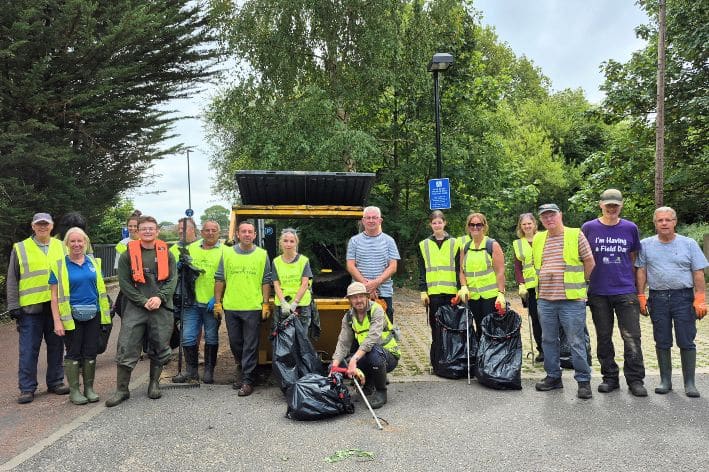
Our team have also been out in the community, working with local volunteers to clear litter from the brook, woodland and park.
Help us to restore our rivers
Rivers like Liggard Brook have been heavily modified by humans. In the past, straitening rivers to increase their speed and power was a very convenient way of harnessing their energy, or using them to move water and waste away from towns. Likewise, widening channels was thought to reduce flood risk, but it causes a whole host of other issues. But, we’re helping to turn back the clock. Rivers like Liggard Brook deserve to be restored to their natural glory, and you can help us on our mission.
