Downham Mill; connecting rivers and heritage
We’re excited to share our latest fish easement as part of our Room for Rivers: Ribble Revival programme! This project focuses on improving the ecological health and connectivity of Ings Beck, a vital watercourse with a rich history connected to Downham Mill.
A historic connection
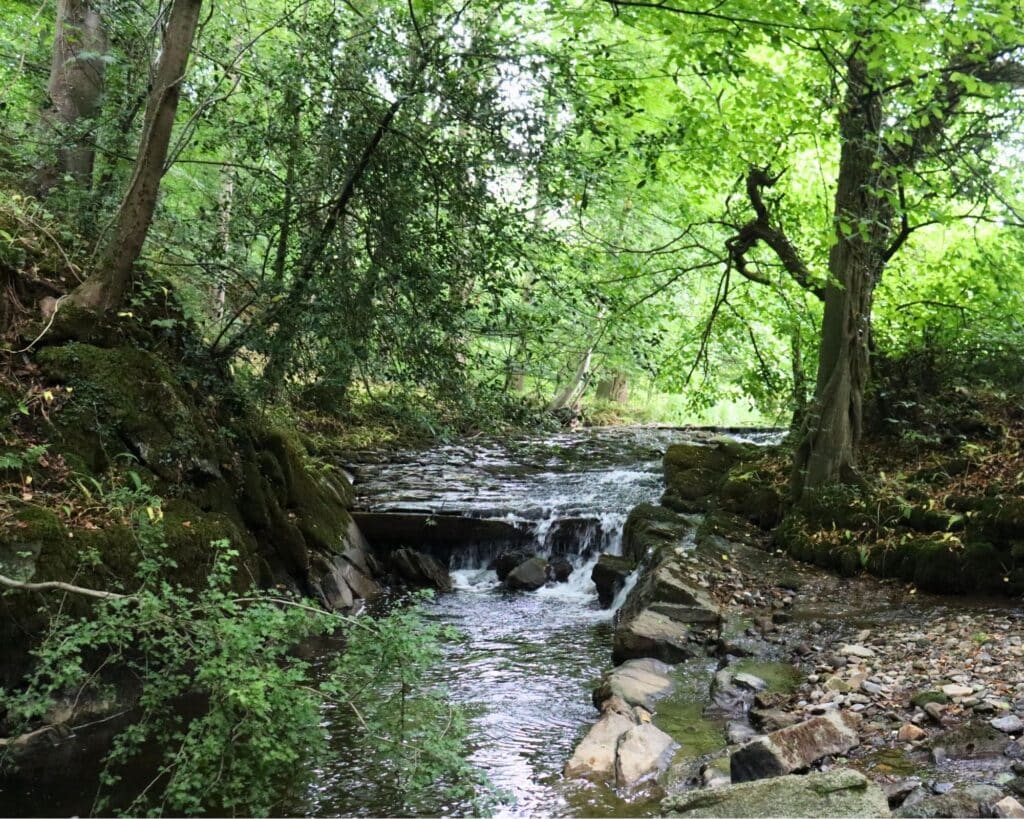
Downham Mill, constructed in 1818, stands as a testament to the area’s industrial heritage. Originally, the mill was powered by water diverted from Ings Beck via a weir, harnessing the stream’s flow to turn its waterwheel. For over a century, the mill played a crucial role in the local economy, grinding corn and supporting the community.
By around 1930, the mill ceased industrial operations and was converted into a farmhouse, which remains occupied today. Despite these changes, the weir still functions, diverting water into the mill pond and supplying the farmhouse with water. However, this longstanding structure has inadvertently created barriers for aquatic life, particularly fish migration, impacting the ecological vitality of Ings Beck.
Why is Ings Beck important?
Ings Beck isn’t just a small stream; it’s a vital ecological stretch of watercourse supporting a diverse range of species. Fish such as salmon and trout, along with various invertebrates and plant species, rely on free movement along the watercourse for spawning, feeding, and maintaining healthy populations.
Unfortunately, the existing weir acts as a partial barrier, restricting fish from migrating upstream under most flow conditions. Since the weir remains in active use for water diversion, a complete removal wasn’t feasible. Instead, our goal was to modify the structure to improve fish passage while preserving its functional role.
What have we done at Downham Mill?
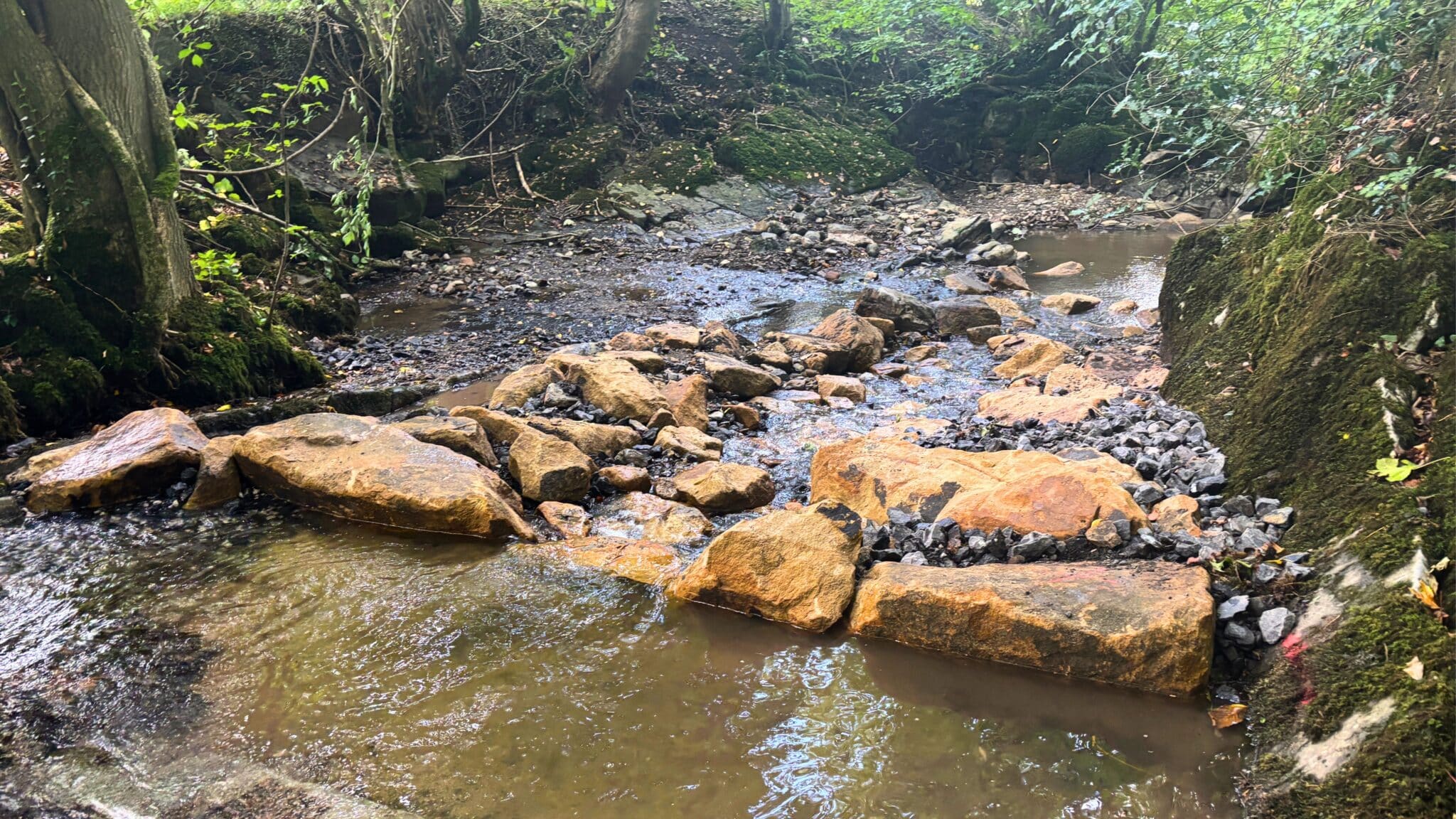
To enhance fish migration, our team designed and constructed a rock ramp and an eel bypass alongside the existing weir. The rock ramp involves strategically placing rocks and boulders to reduce the gradient of the weir, creating a more navigable pathway for fish. This design mimics natural stream features, encouraging fish to swim upstream more easily by providing resting places and smoother water flow.
These modifications not only benefit fish but also improve overall stream health by promoting better water flow and sediment transport.
Part of the Ribble Revival: Room for Rivers Programme
Funding for this project has come from the Species Survival Fund. This £25 million initiative aims to restore over 3,300 hectares of habitat across the country. The National Lottery Heritage Fund administers the fund on behalf of DEFRA, and Ribble Rivers Trust has received £1.65 million to support our work. Fellow wildlife charities, farmers, and community groups nationwide have also benefitted the fund. Together, we’re helping to accelerate nature recovery and protect vital species.

Rivers are at the heart of our local landscapes. Whether you’re casting a line, exploring a riverside trail, or simply basking in the beauty of nature, you can help protect these special places now, and for generations to come.
By becoming a Ribble Rivers Trust supporter for just £3 a month, you’ll be funding real, on-the-ground action.
Ready to make a difference? Learn more here: ribbletrust.org.uk/become-a-supporter