
Exploring the Ribble Estuary
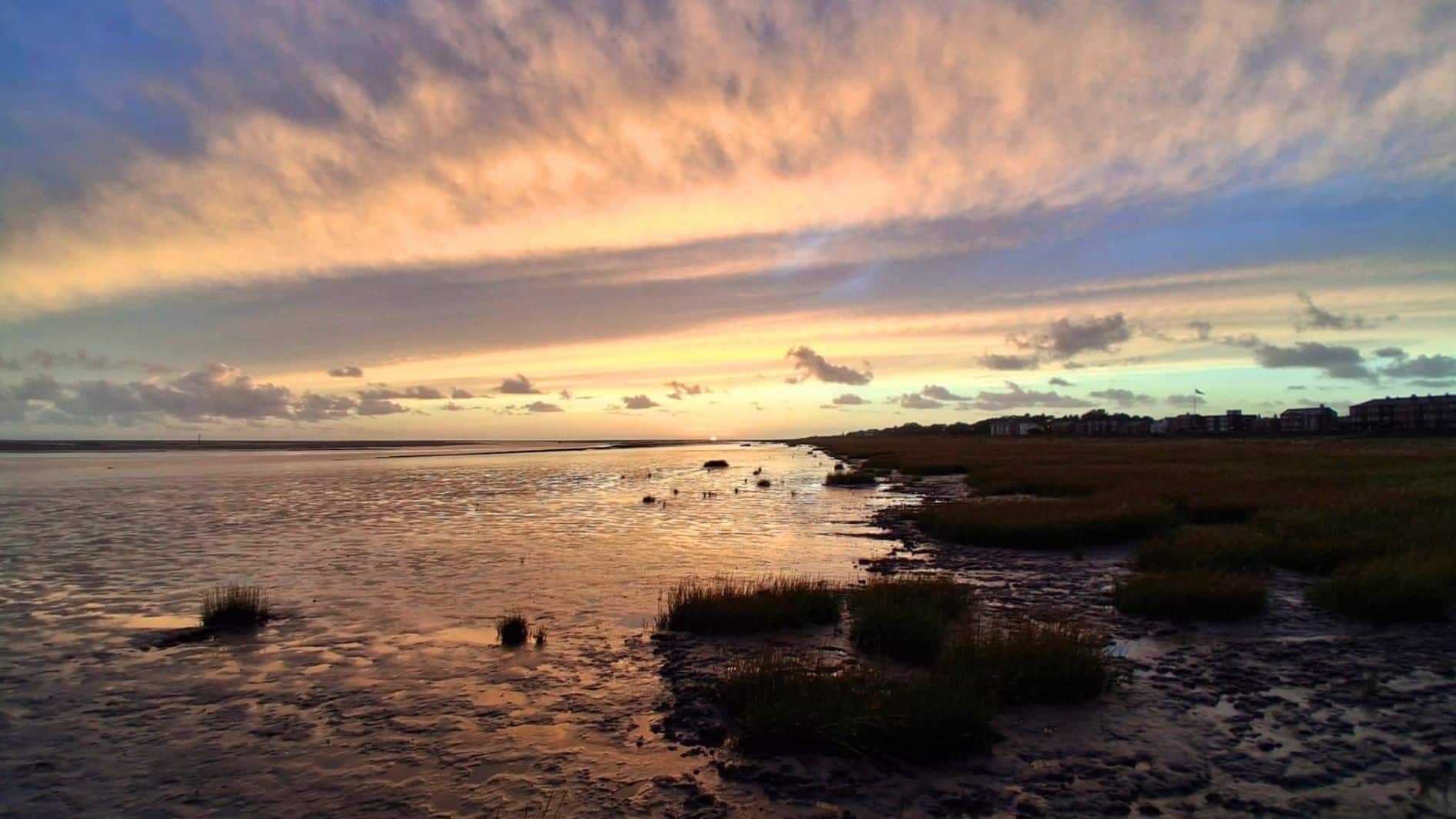
I love it when a plan comes together. But equally, I love a surprise; finding myself surrounded by nature and being in awe of the wonderful world after a last-minute decision to have “a quick look down there…”. My impromptu exploration began before sunset and by happy coincidence the tide was low.
Wildlife on the Ribble Estuary
Low tide is a great time to spot birds since this is prime feeding time (you can look up the local tide tables online). At low tide, you can walk out along the pier near the Lifeboat Station at Central Beach in Lytham and watch shorebirds forage on the mudflats.
Listen, and among the raucous cries of the great black backed gulls, you may hear the melancholy cry of a curlew as it swoops in to probe the mud for invertebrates. Oystercatchers will announce their arrival loudly with high pitched peep-peeping.

Be ready for the high-speed acrobatic flyby of a flock of sandpipers looking for a spot by a tidal pool or river channel. In the far distance, you may spot a murmuration above the salt marshes across the other side of the estuary.
Autumn is a great time to visit the Ribble Estuary as migratory shorebirds visit to rest and refuel on their journey south. The weather can be warm at this time of year but there is often a breeze so wrap up warm. If it is chilly you may like to head to the shelter at the end of Fairlawn Road. Here, at high tide, many species roost at Church Scar (which is the coastline between Lytham Green and Granny’s Bay).
The Ecological Importance of the Ribble Estuary
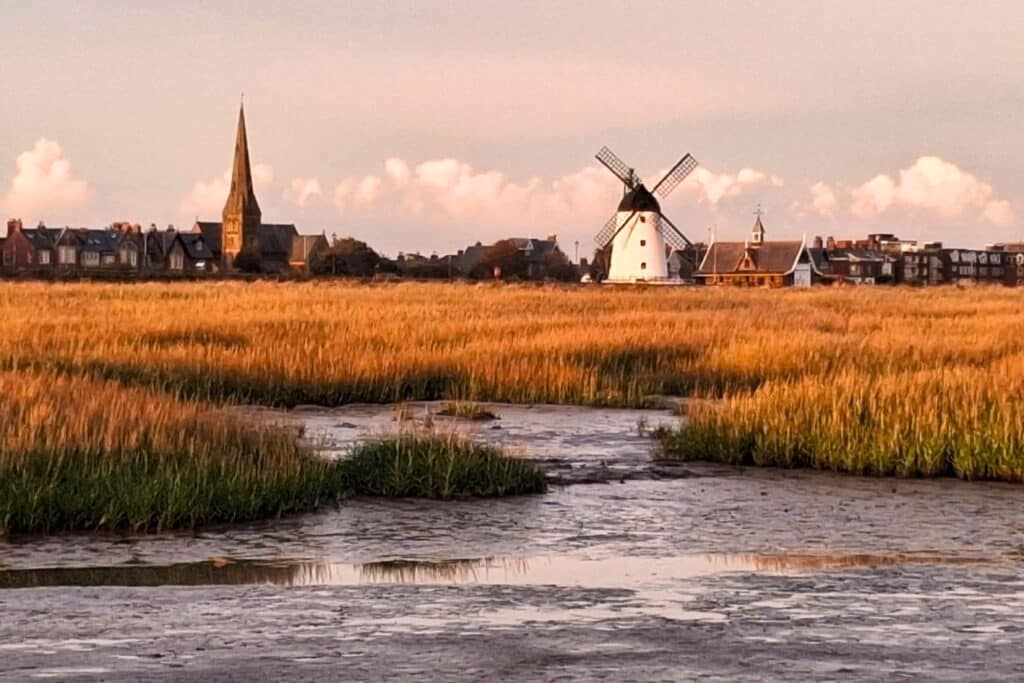
The combination of wetland, mud and sand flats, sand dunes and saltmarsh make the Ribble Estuary an internationally important roosting site for wading birds, wildfowl, terns and other migrating species.
Take care to avoid disturbing them during their much needed rest. The estuary is a Site of Special Scientific Interest (SSSI) and National Nature Reserve.
The reserve begins 7km west of Preston and includes land on both sides of the Ribble Estuary: as far as Lytham, on the northern bank, and Crossens (near Marshside), on the southern bank.
The estuary is also recognised as a Ramsar Wetland of International Importance and is part of the Ribble and Alt Estuaries Marine Conservation Zone. This means that specific features within this area are protected and, where necessary, regulators will manage marine activities.
The habitats of the Ribble Estuary support shellfish and insects that provide a valuable food source for resident and visiting birds. The mixing of salt water and river water makes these brackish waters home to sole, flounder and plaice. The estuary is critical habitat for fish such as smelt to complete their lifecycles. Porpoises and grey seals can be sighted and blooms of moon jellyfish even bring turtles to this coast. The area is also rich with flora specific to sand dunes and salt marshes, including samphire.
Visit the Ribble Estuary
Why not plan a trip to the Ribble Estuary this Autumn? You may like to visit our website to download a guided walk leaflet for a circular walk around Lytham.
Before you go, make sure you check the weather and the tide times and that you know how to stay safe around the water. Remember, the tide can come in quickly on these marshes.
Help Us to Protect These Special Places
The Ribble Catchment is full of amazing spaces, but the combination of freshwater and saltwater make the estuary a truly unique space for nature.
You can help us to protect, improve, and restore these vital habitats for both wildlife and people.
Ready to make a difference? Make a donation today 👇