Langden Gravels
High in the Forest of Bowland, Langden Brook flows through some of the most spectacular landscapes in the Ribble catchment.
A tributary of the River Hodder, it is one of the catchment’s most important strongholds for Atlantic salmon and other freshwater wildlife. But despite its appearance, natural river processes here have been interrupted for many years.
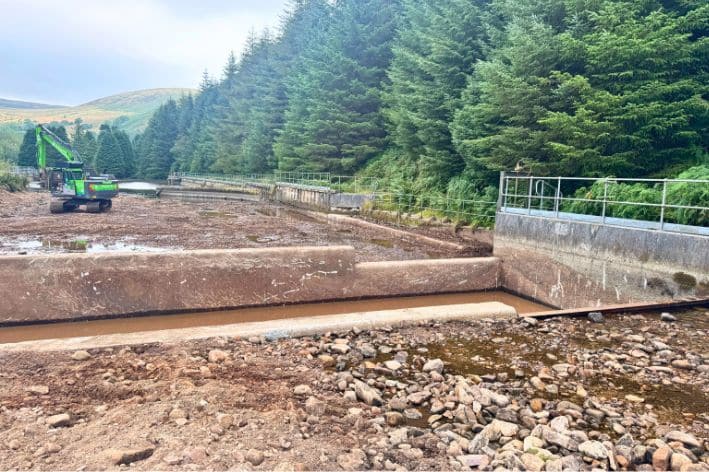
As part of the Stocks Reservoir water supply system, Langden Brook contains a gravel trap designed to capture sediment moving downstream. Over time, large amounts of gravel accumulate within the trap rather than continuing their natural journey through the river system.
While this infrastructure plays an important role in managing drinking water supplies, the trapped gravel is no longer available further downstream, where salmon and other species need it most.
The result is a river system where valuable spawning habitat becomes concentrated in one location while other areas are gradually deprived of the material they need to function naturally.
Why gravel matters
For salmon, gravel is much more than just stones on a riverbed.
Each winter, adult salmon return from the Atlantic Ocean to lay their eggs in clean, loose gravel. These gravel beds provide shelter and oxygen for developing eggs and young fish, giving them the best possible start in life.
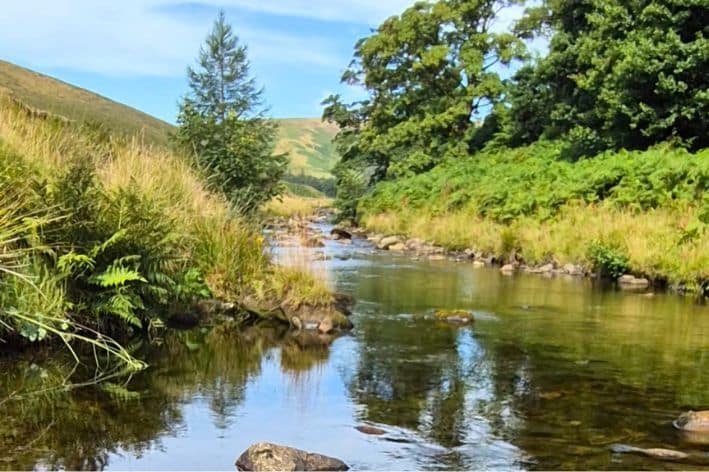
But rivers are dynamic systems. Gravel naturally moves downstream, carried by high flows and floods. This constant movement helps create the varied habitats that rivers depend on.
When that movement is interrupted, problems can begin to develop.
Restoring a natural process
The solution is surprisingly simple.
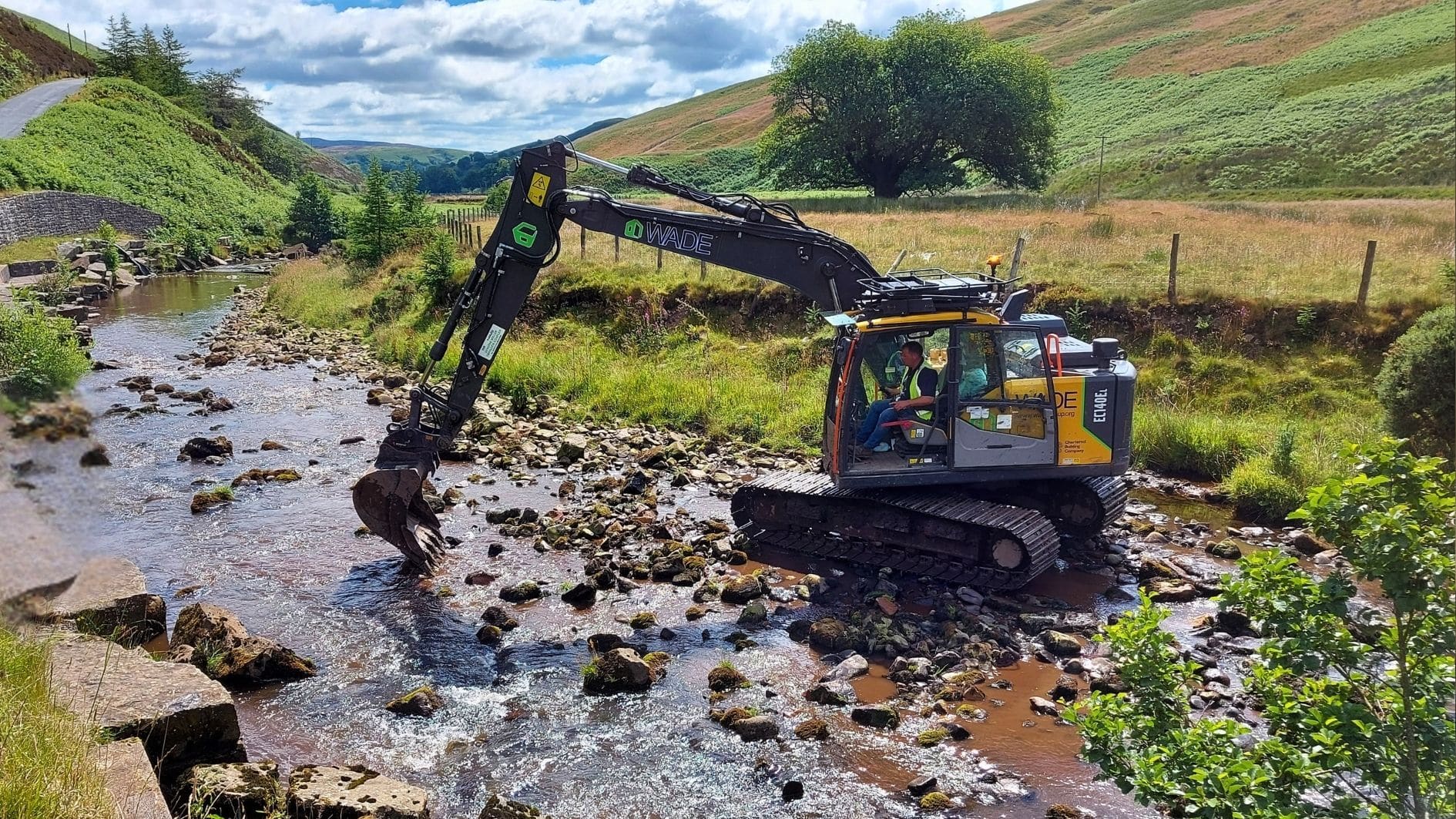
By removing gravel that has accumulated within the trap and carefully reintroducing it further downstream, we can help restore the natural movement of sediment through the river.
Rather than creating something new, we’re helping the river regain a process that has been interrupted.
Over time, these gravels will provide improved habitat for spawning salmon and trout, support a diverse range of aquatic wildlife, and contribute to a healthier, more resilient river system.
We’d like to thank our contractors, Wade Group, who have helped us to deliver this project. Our team have been lucky enough to work with Wade Group on numerous projects, and having a great contractor always makes the project run smoothly.
Putting wildlife first
Before any work begins, protecting wildlife is our top priority.
As part of the project, fish rescue operations are carried out to safely move fish away from the working area before excavation begins. These fish rescues reveal an incredible variety of species, including Atlantic salmon, brown trout, salmon, eels, minnows, bullheads, and stone loach.
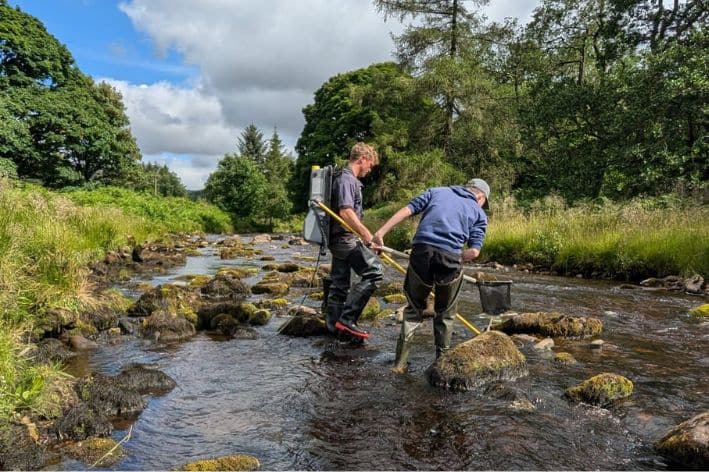
These surveys are a reminder of just how much life depends on healthy rivers, and why this work matters.
Help us Protect Rivers
By restoring the natural movement of sediment, we’re helping create healthier habitats for fish and improving the long-term resilience of the river. And this is just one of many projects we’re working on.
You can support projects like this by making a one off or recurring donation.
Ready to make a difference? Make a donation today 👇