
Help Us Track Drought Across the Ribble Catchment
After a summer of heatwaves and prolonged dry weather, more than 70% of England is now officially in drought and many of the small becks, streams, and gills that feed our rivers are shrinking dramatically, and in some cases drying up completely.
We Need Your Help
The Ribble catchment covers thousands of kilometres of rivers, streams, and tributaries, and we can’t be everywhere at once. That’s why we’re asking for your help.
If you’ve seen a beck, stream, gill, or watercourse that has dried up or is significantly lower than normal, please let us know using the survey below. The information you provide will help us:
- Identify watercourses most affected by drought
- Understand where wildlife may be under pressure
- Build a clearer picture of drought impacts across the catchment
- Prioritise future projects that could help protect vulnerable rivers and streams
Every report helps us better understand what’s happening on the ground.
Report a Dried-Up Watercourse
Don’t have the Survey123 app? Simply select “Open in the Web App” and you can complete the survey through your browser. If you’re browser isn’t displaying the form correctly, you can use this link: survey123.arcgis.com
Why Is Drought Such A Big Issue?
Climate change is effecting the way our natural world works, and the careful balance of our rivers is no different. Over the last decade we’ve already seem a huge change in both short term and long term weather patterns with increasingly unpredictable floods, droughts, and rising temperatures.
It might seem unbelievable, but a recent report warns that without urgent action, the country could face water shortages of up to 5 billion litres a day by 2055.
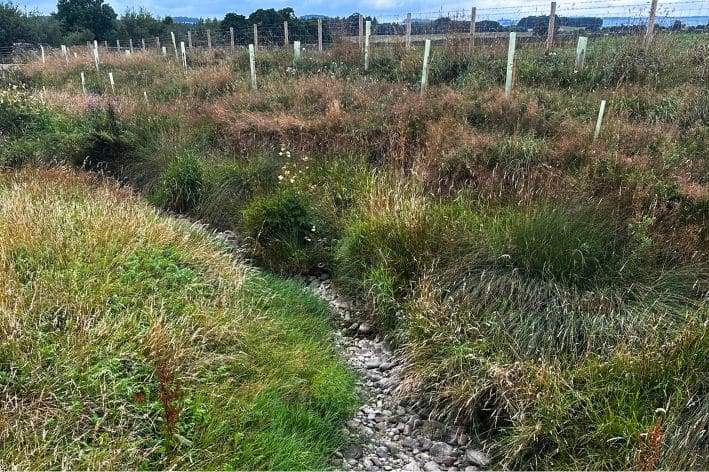
For the wildlife that depends on healthy, freshwater habitats, the consequences can be severe.
Fish, aquatic insects, amphibians, and other river wildlife rely on fresh, flowing water to survive. As water levels fall, habitats become smaller and more fragmented. Some species can move to deeper water, but many become trapped by artificial barriers or isolated pools. The remaining water also warms up more quickly, reducing oxygen levels and increasing competition for food and space.
Drought doesn’t just reduce the amount of water in our rivers. It also concentrates pollutants and nutrients, which can increase algal growth and place even more pressure on already stressed ecosystems.
As river flows fall, more water may need to be taken from rivers and reservoirs to supply homes, businesses, and farms. This puts more stress on already struggling river systems.
Then, when rain finally arrives, the dry ground often struggles to absorb it. Instead of soaking into the landscape, water can run rapidly across the surface, increasing flood risk and disappearing before plants and habitats can benefit.
Help us Protect Rivers
Climate change is one of the biggest threats to our rivers; from increasing water temperatures to droughts and flash floods. The good news is that we still have time to make a difference, and we can protect our rivers and wildlife from the effects of our changing climate.
You can support our work by making a one off or recurring donation.
Ready to make a difference? Make a donation today 👇